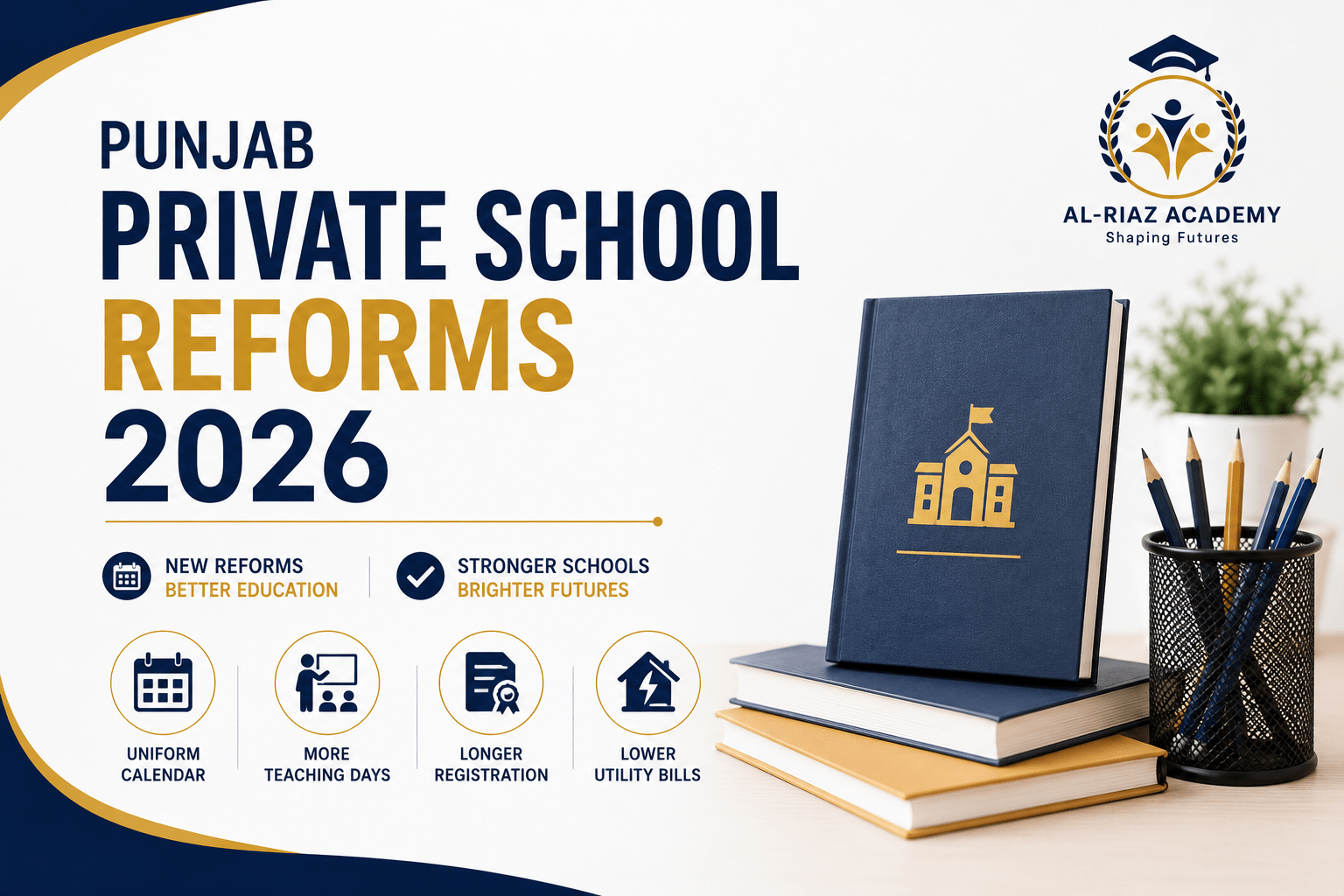
Punjab Private School Reforms 2026 have been finalized after months of discussion between the Punjab School Education Department and the All Pakistan Private Schools Management Association (APPSMA). The agreement introduces a package of changes covering academic calendars, teaching days, school registration, and utility costs, marking one of the most significant shifts for private institutions across the province in recent years.
What Led to These Reforms
The reforms were finalized during the fifth meeting of a committee formed on the directions of the Lahore High Court, tasked with developing a uniform academic calendar for educational institutions across Punjab. The committee was chaired by Punjab School Education Secretary Mudassar Riaz Malik, with senior officials and private school representatives, including APPSMA’s central leadership, taking part in the discussions.
The 4 Big Changes Under These Reforms
1. A Uniform Academic Calendar
All private schools across Punjab will move to a single, standardized academic calendar, replacing the inconsistent schedules that have varied from school to school and region to region.
2. More Teaching Days Each Year
Schools will now be required to observe between 190 and 227 teaching days annually. Officials say this change is meant to improve curriculum delivery and reduce learning losses linked to extended school closures.
3. Longer School Registration Validity
Private schools will benefit from an extended registration validity period, reducing how often institutions need to go through the renewal process.
4. Utility Bills Moved to Domestic Tariff
In a major relief for private school owners, educational institutions will be reclassified from the commercial utility tariff category to the domestic category — a change expected to meaningfully lower electricity and utility costs for schools province-wide.
Why Private School Owners Pushed for This
APPSMA representatives said the discussions were highly productive, giving private school owners a chance to raise long-standing administrative and operational concerns. A key complaint centered on how prolonged summer and winter vacations had repeatedly disrupted teaching schedules, making it difficult for many schools to complete their prescribed curriculum within a single academic year.
What Happens Next
The Punjab School Education Department will now draft formal legislation to implement these agreed proposals, in consultation with relevant stakeholders. The reforms are expected to roll out starting from the next academic year, once the legislation is finalized.
For official updates, visit the Punjab School Education Department.
What This Means for Parents and Students
While these reforms are primarily administrative, they carry real implications for families too:
- A uniform calendar means more predictable school schedules across different institutions
- More teaching days could mean less rushed, more thorough syllabus coverage
- Lower operating costs for schools could, over time, ease pressure on fee structures
Frequently Asked Questions
What are the Punjab Private School Reforms 2026?
Punjab Private School Reforms 2026 is a package agreed between the Punjab School Education Department and APPSMA, covering a uniform academic calendar, increased teaching days, longer registration validity, and a shift to domestic utility tariffs for private schools.
When will these reforms be implemented?
The reforms are expected to take effect from the next academic year, once the required legislation is drafted and finalized.
Why is the utility tariff change significant?
Moving private schools from the commercial to the domestic utility category is expected to significantly reduce electricity and utility costs for institutions across Punjab.
How many teaching days will schools be required to observe?
Between 190 and 227 teaching days annually, depending on the specific school calendar adopted.
Our Take
As a registered private academy ourselves, we welcome reforms like this that genuinely address the operational challenges private institutions face. A uniform calendar and more predictable teaching days benefit not just school owners, but students too, since consistent scheduling directly supports better syllabus completion and exam preparation. We’ll continue to follow how this legislation develops and what it means for institutions like ours.
Conclusion
The Punjab Private School Reforms 2026 represent a significant shift for private educational institutions across the province, addressing long-standing concerns around academic scheduling, registration, and operating costs. As the Punjab School Education Department moves toward drafting formal legislation, we’ll keep tracking updates on when and how these changes take effect.
Stay updated with the latest education news on our website.

Ms. Malaika Riaz is the Founder and Director of Al Riaz Academy, a SECP registered institute in Toba Tek Singh. She holds a Master’s degree in Zoology and has 5+ years of teaching experience, focused on concept based education from Nursery to 2nd Year.